Employers

Take control of cancer care.

True employee engagement, clinical outcomes, and cost control across the entire cancer care journey is the reality, with Color.

Conquer the complexities of cancer care

With cancer as the largest driver of employer healthcare spend, you need to look for answers beyond uncontrollable drug prices. Instead, focus on avoidable issues like low screenings, lack of followup, delayed diagnoses, uncoordinated care, and limited treatment management through survivorship. This is where you can truly impact cost drivers and achieve better outcomes. Most traditional programs are reactive, showing up too late to improve outcomes and costs.

With Color on your side, you can change the trajectory for good.


"We are so glad to have invested in our employees' lives with Color and are seeing great impact already on the dialogue around cancer care and prevention in our workforce, as well as on screening rates."

“I saw that this program would impact our entire population... It speaks to everyone, and everyone can partake in it.”

"Our employees are incredibly engaged with Color, and the feedback has been overwhelmingly positive."

"A member was diagnosed just 18 days after that initial screening, which can typically take up to six months."

“I absolutely feel Color should be a core part of healthcare benefits.”

“Color offers personalized screening for early detection, quick access to world-class treatments, and ongoing survivorship support long after they ring that bell.”

What Color delivers

55%

faster diagnosis

77%

increase in screening adherence

>75%

of costly care gaps closed

$23000

saved per patient

$6000

saved per survivor

2.8:1 ROI

in Year 1

Breakthrough engagement

Easy access tailored to your team drives action and 20% enrollment
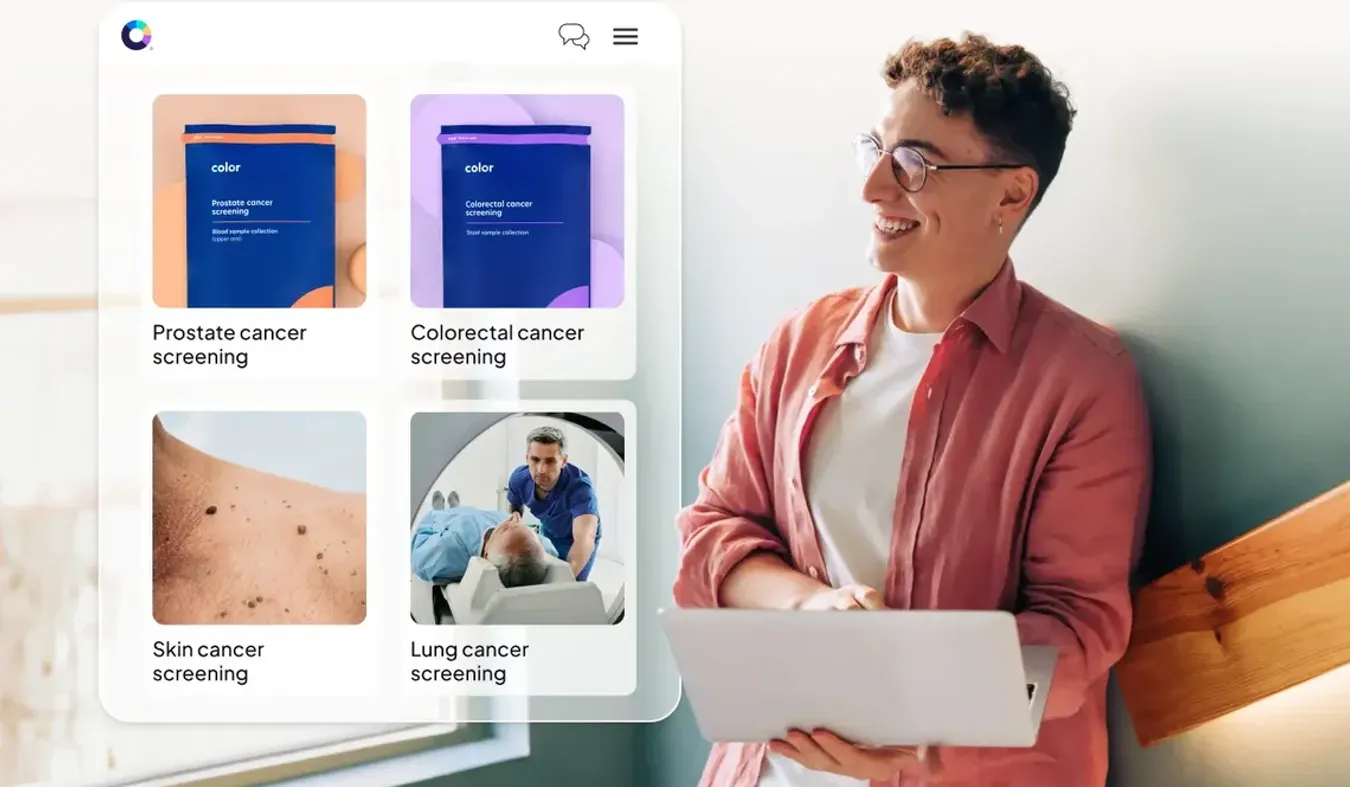
Tile #1

Early detection and clinical follow-up management

30 -50% savings compared to current spend
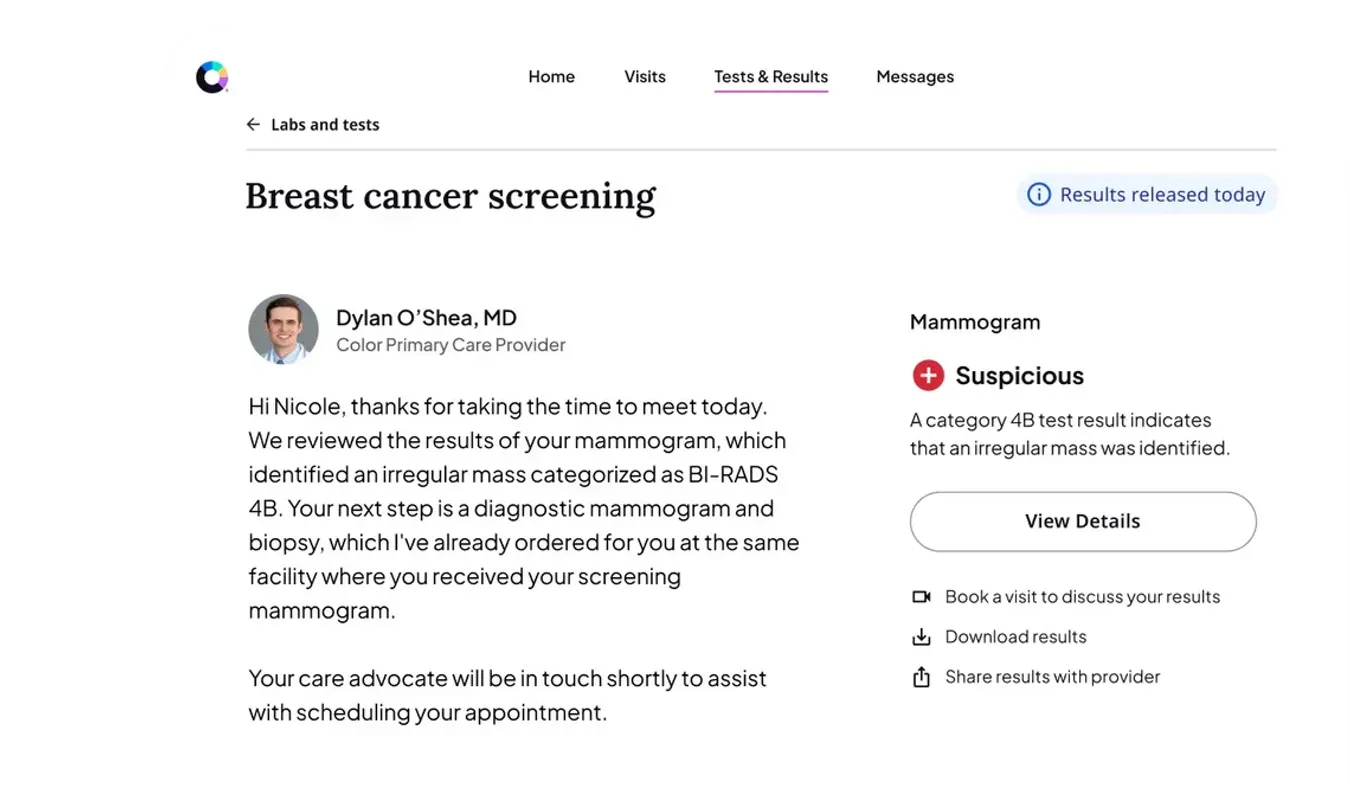
Tile #2

Clinical care management beyond navigation

Save ~$23K per patient
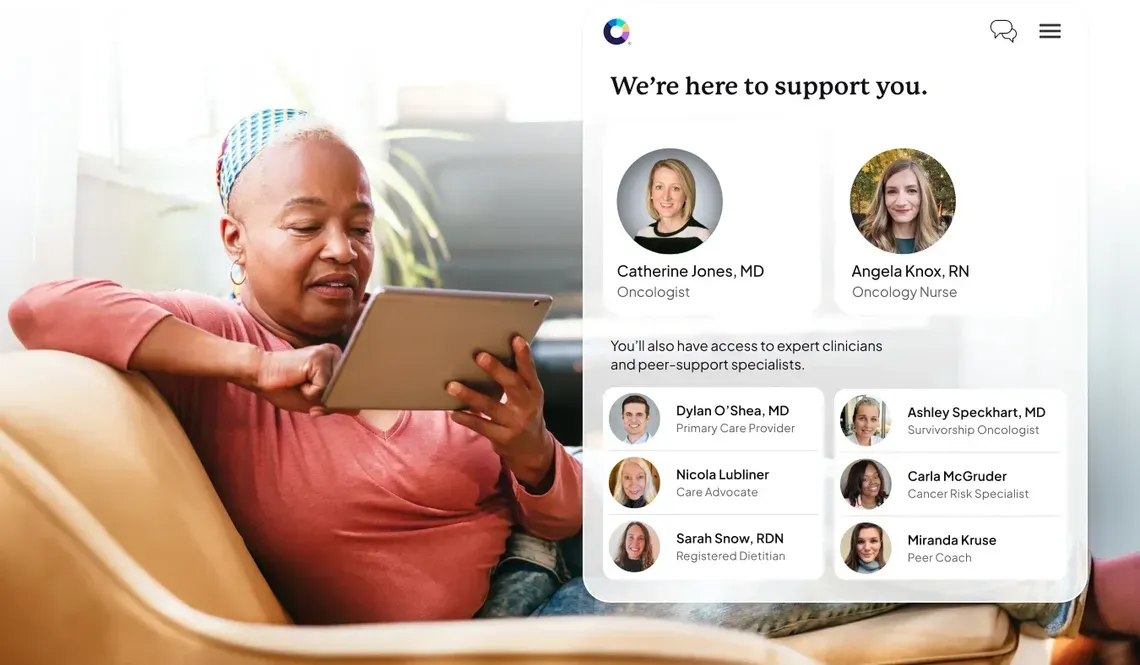
Tile #3

Post-treatment planning & care for survivorship complexities

Oncologist-led oversight saves ~$6,000 per survivor
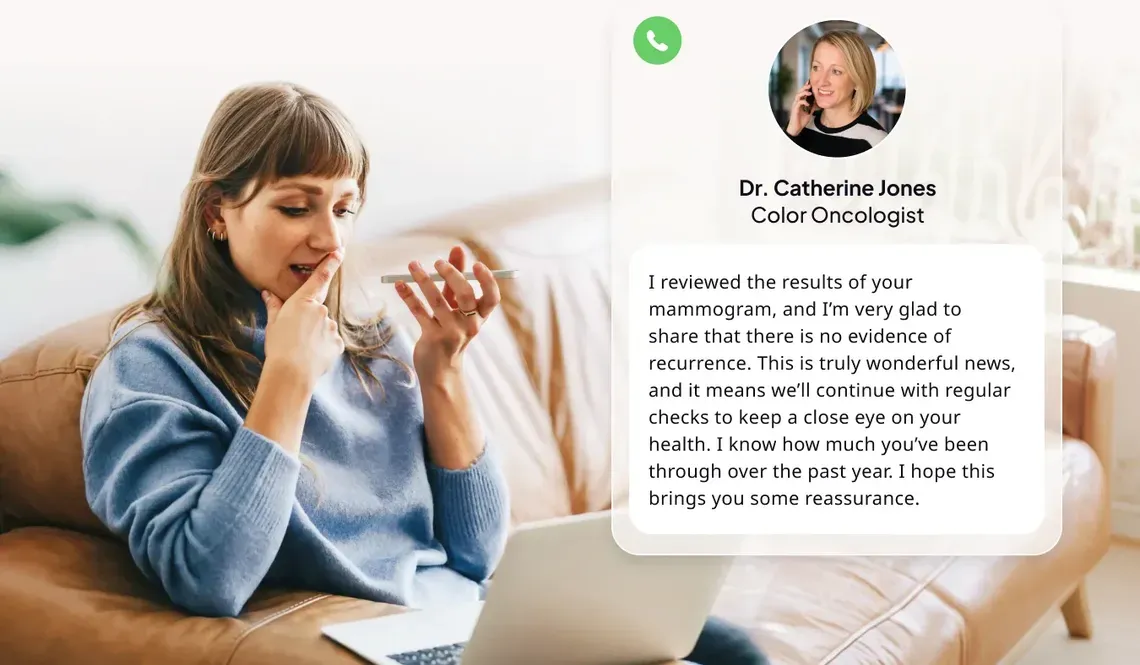
Tile #4

Frequently asked questions

What problem does Color solve for employers?

Cancer is one of the largest and fastest-growing drivers of employer healthcare spend, fueled by late diagnoses, fragmented treatment care, and unmanaged survivorship. Color helps employers take control by addressing cancer earlier, managing it clinically across every stage, and preventing avoidable delays, complications, and downstream costs.

How does Color work with existing health plans and benefits?

Color is designed to work with, not replace, an employer’s health plan. Care is integrated with in-network providers and existing benefit programs, allowing employers to add a clinically-led cancer program without disrupting current coverage or mandating sites of care.

Is Color navigation or direct clinical cancer care?

Color delivers direct clinical cancer care. Our oncologist-led clinical team diagnoses, prescribes, orders tests, manages symptoms, and collaborates peer to peer with local, treating providers. This care goes beyond navigation, which can guide but cannot intervene clinically.

Who can use Color?

All eligible employees and covered family members and dependents can use Color, regardless of cancer type, stage, or where they are in the journey. This includes people focused on cancer screening, those newly diagnosed, individuals in active cancer treatment, and cancer survivors.

How does Color drive engagement and use?

Color pairs clinical access with thoughtful, multi-channel engagement designed to meet and engage employees where they are. This approach consistently drives higher enrollment and use by reducing friction, fear, and confusion around cancer care screening, diagnosis and clinical treatment.

How do employers measure ROI with Color?

Employers receive clear reporting tied to member engagement with the benefit, clinical outcomes from using Color, and Color’s financial impact. Results include faster diagnosis, higher screening adherence, closed care gaps, and measurable cost savings, delivering strong return on investment (ROI) in year one.