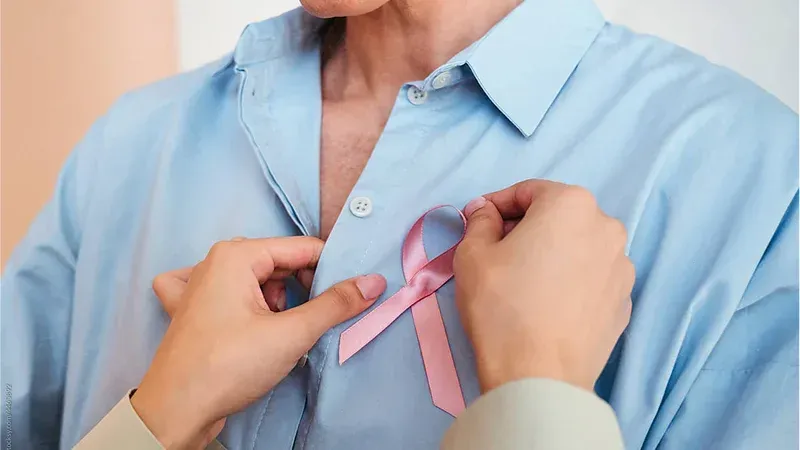



Patient Story

Cancer impacts emotional health as much as physical health. Color Cancer Connect provides peer-led support to reduce isolation, build resilience, and help employees stay engaged at work and in life.
Cancer brings emotional and practical strain into everyday life for people in treatment, caregiving, or survivorship. Without peer-led support, people often feel isolated and unsure where to turn, and managers and ERGs want to help but lack the right structure. This strain affects recovery, relationships, and work. Supporting these needs helps people feel understood, rebuild confidence, and re-engage with both life and work after cancer.
reduction in depression
reduction in anxiety
reduction in stress
Cancer Connect offers peer-led, evidence-based meetings that employees can join anytime. The program provides practical tools people can use in real moments, across treatment, survivorship, and caregiving.
Cancer Connect offers peer-led, skills-based sessions guided by cancer survivors and caregivers. Employees can join weekly virtual meetings at any time, gaining practical tools designed specifically for patients, survivors, and caregivers.
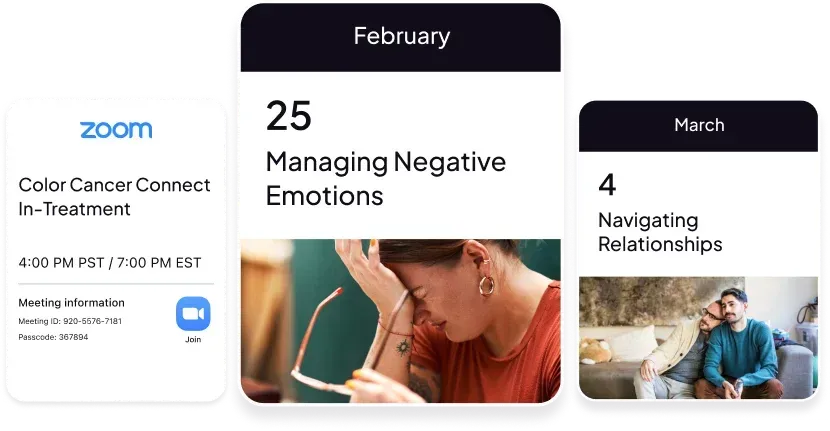
Structured topics help people manage fear, uncertainty, stress, and physical symptoms. Sessions focus on thoughts, emotions, behaviors, relationships, and self-care, building resilience, connection, and self-compassion over time.
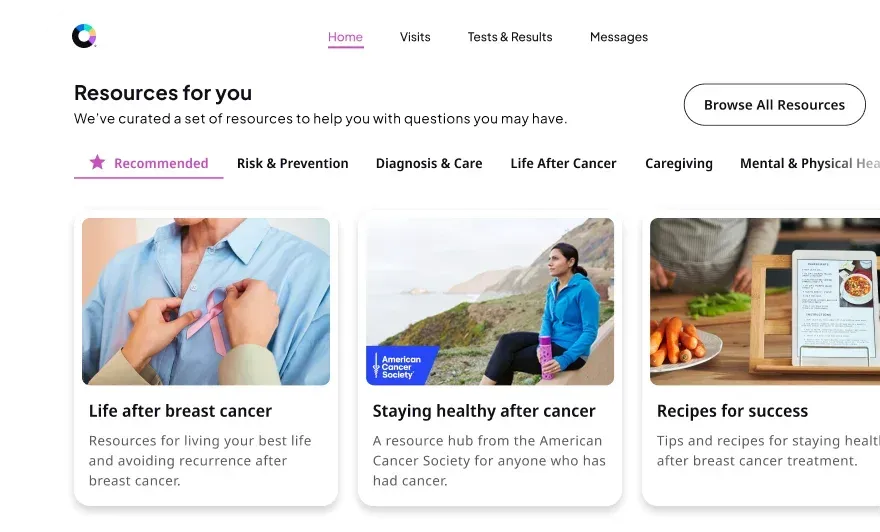
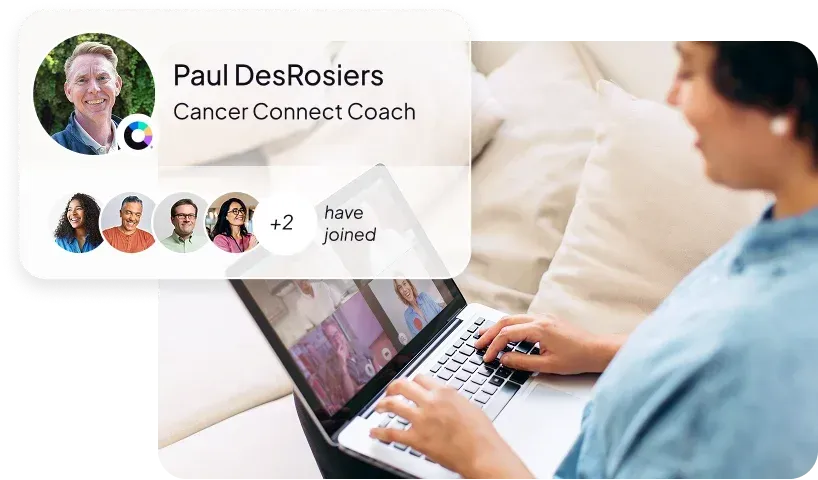
Peer connection with others who truly understand helps people feel less alone and more engaged. Ongoing support is available throughout treatment, survivorship, and caregiving, creating a space that normalizes challenges and reduces stigma.
 Patient Stories